
Time to BJJ Black Belt: Real Statistics
The data-driven answer: 12 years and 4 months on average. Discover the real time at each belt according to statistics from 40,000 practitioners.
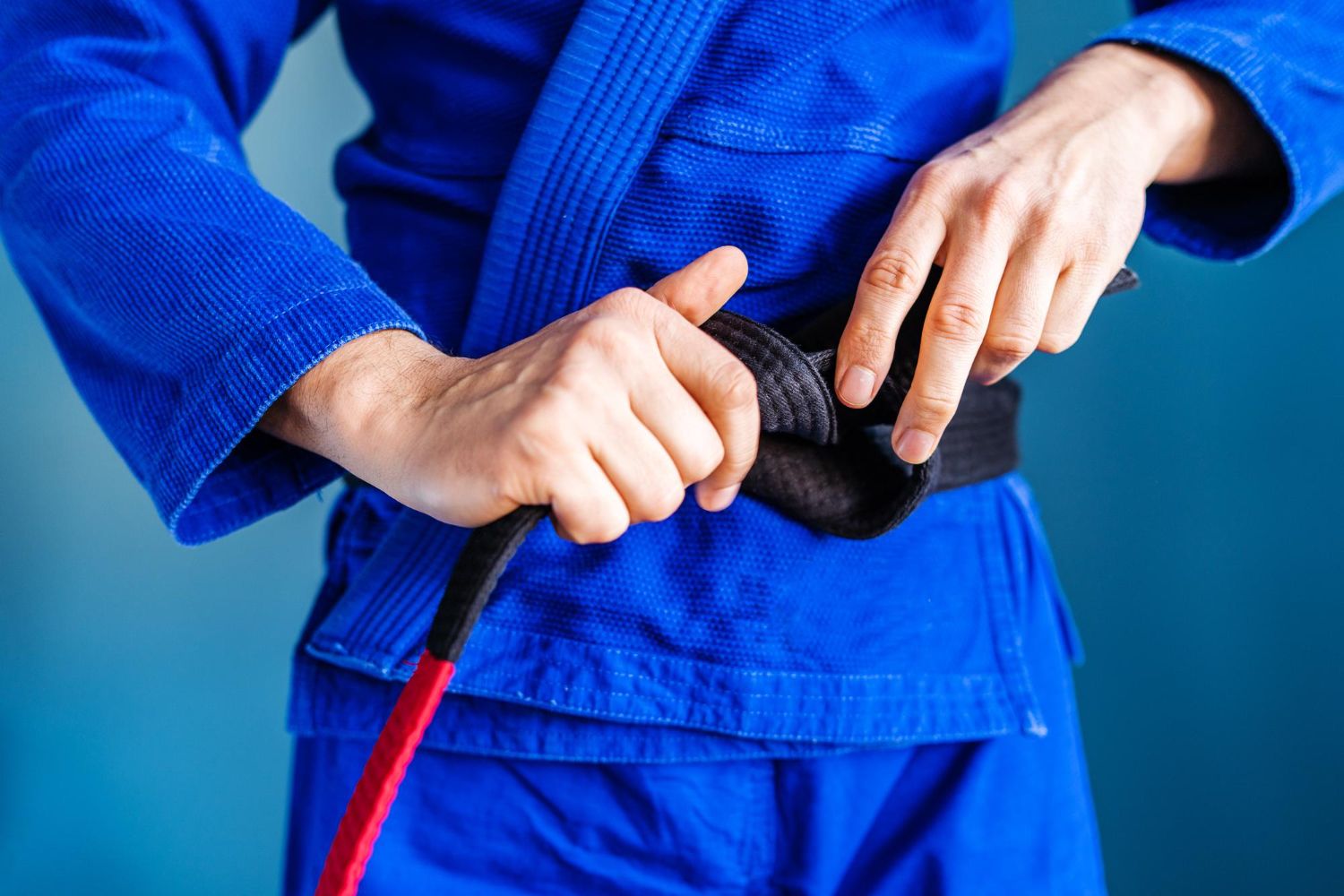
How long does it really take to get a black belt in Brazilian Jiu Jitsu? According to data from over 40,000 practitioners registered on BeltChecker.com, the answer is: 12 years and 4 months on average.
That’s not an approximation or an optimistic estimate. It’s the actual time practitioners have taken from when they first stepped on the mats to when they tied on their black belt.
The Verdict: 12 Years and 4 Months
Let’s get straight to the point. According to the analyzed data:
- Average total time to black belt: 12 years, 4 months.
- Average age when starting BJJ: 29 years.
- Average age when receiving black belt: 39 years.
This means that if you start today at 30 years old, statistically you’ll receive your black belt around 42. It’s not the fastest path to a sports goal, but it’s not the slowest either. It’s simply the reality of BJJ.
Time at Each Belt: The Breakdown
The path to black isn’t linear. Some belts take significantly longer than others:
| Belt | Average Time at Rank | Cumulative Time |
|---|---|---|
| White → Blue | 2-3 years | 2-3 years |
| Blue → Purple | 4 years | 6-7 years |
| Purple → Brown | 2-3 years | 8-10 years |
| Brown → Black | 1.5-2 years | 10-12+ years |
The most surprising data point: blue belt is where you spend the most time. Four years on average. This contradicts what many beginners expect.
Why Blue Belt Takes the Longest
Blue belt is paradoxically the longest rank of the journey. Why?
1. It’s the Broadest Rank in Content
Blues must master:
- All basic positions and their variations.
- Multiple guard systems.
- Fundamental and advanced guard passes.
- Submissions from every position.
- Complete defenses and escapes.
It’s like learning the complete alphabet before you can write poetry.
2. Blue Belt Blues
Many blues experience:
- Demotivation after the initial achievement.
- Prolonged learning plateaus.
- Interruptions from injuries, work, or family.
- Loss of the beginner’s “honeymoon phase.”
Those who overcome this phase generally complete the path to black. Those who don’t add to the dropout statistics.
3. Requirements Are High
To go from blue to purple, you need to demonstrate:
- Complete technical competence.
- Ability to teach basic concepts.
- Consistency over years, not months.
- Maturity in your game and mindset.
If you want to dive deeper into this stage, read our article on how long it takes to get a blue belt.
Age Progression: From 29 to 39
The data reveals an interesting pattern about age:
| Metric | Age |
|---|---|
| Average age when starting | 29 years |
| Average age as white belt | 29-32 years |
| Average age as blue belt | 32-36 years |
| Average age as purple belt | 36-38 years |
| Average age as brown belt | 38-39 years |
| Average age when receiving black | 39 years |
This debunks the myth that you need to start young. Most black belts started as adults, not as children.
Reality vs. IBJJF Minimums
The International Brazilian Jiu Jitsu Federation (IBJJF) establishes minimum times between promotions. Let’s compare with reality:
| Transition | IBJJF Minimum | Real Average |
|---|---|---|
| White → Blue | No minimum | 2-3 years |
| Blue → Purple | 2 years | 4 years |
| Purple → Brown | 1.5 years | 2-3 years |
| Brown → Black | 1 year | 1.5-2 years |
| Total minimum | 4.5 years | 12+ years |
The difference is staggering. IBJJF minimums are exactly that: theoretical minimums that almost no one meets. A black belt in 4.5 years is exceptionally rare and generally reserved for:
- Full-time professional athletes.
- World champions.
- People with significant prior grappling experience.
Factors That Affect Your Timeline
Factors That Accelerate
- Training frequency. 5+ sessions weekly vs. 2-3.
- Active competition. Competitors tend to progress faster.
- Prior experience. Judo, wrestling shorten the path.
- Full-time training. Professionals vs. hobbyists.
- High-level academy. Access to better instructors and training partners.
Factors That Slow Down
- Injuries. Each injury can mean months of pause.
- Life interruptions. Work, family, relocations.
- Inconsistent training. Less than 2 sessions weekly.
- Lack of sparring. Technique only without rolling limits progress.
- Academy changes. Restarting with new instructors.
The Truth About “Fast Black Belts”
Occasionally you’ll hear about someone who got their black belt in 5 or 6 years. Before comparing yourself, consider:
- BJ Penn. Black belt in 3 years, but trained 6+ hours daily with the best in the world.
- Caio Terra. 4 years to black, but started young and dedicated himself exclusively to BJJ.
- Demian Maia. World champion within a few years of training, but was already a black belt in Judo.
These are extreme exceptions, not examples to follow for the average practitioner.
What This Means for Your Journey
Adjust Your Expectations
If you entered BJJ thinking you’d be a black belt in 5 years, adjust your perspective:
- 12 years is the average, not the worst-case scenario.
- The journey matters more than the destination.
- Every belt is a significant achievement in itself.
Plan for the Long Term
With a 12+ year horizon, you need:
- Injury prevention. Train smart, not just hard.
- Life balance. BJJ should complement your life, not consume it.
- Financial sustainability. Budget for years of membership fees.
- Community. Build relationships that last decades.
Celebrate Each Stage
In 12 years you’ll go through many phases:
- The beginner’s excitement.
- The blue belt frustration.
- The purple’s confidence.
- The brown’s anticipation.
- The black’s humility.
Each phase has its value. Don’t rush to move to the next one.
Black Belt Is Not the End
Here’s the secret black belts know: black belt is just the beginning.
The data shows that black belts continue training for decades after their promotion. The degree system continues:
- 1st to 3rd degree. Consolidation (9+ years).
- 4th to 5th degree. Mastery (15+ more years).
- 6th degree (coral). Decades of contribution.
- 7th+ degree. Living legends.
A black belt at 39 years old leaves you potentially 30-40 more years of training and growth.
How to Use These Statistics
For Motivation
- You know exactly what to expect.
- Every year that passes brings you closer to the goal.
- You’re in good company: thousands have walked this path.
For Planning
- Divide the journey into intermediate goals (each belt).
- Mentally prepare for the long blue belt.
- Anticipate that there will be pauses and setbacks.
For Evaluating Your Progress
If you’ve been training for 6 years and you’re a purple, you’re doing well. If you’ve been training for 3 years and you’re still white, maybe you need more consistency. The data gives you an objective reference point.
Summary
The path to black belt in BJJ takes 12 years and 4 months on average. There are no real shortcuts for most of us.
Key points:
- Blue belt is the longest. 4 years on average.
- Starting late isn’t a problem. The average starting age is 29 years.
- IBJJF minimums are irrelevant. Almost no one meets them.
- Black isn’t the end. It’s the beginning of a new phase.
BJJ rewards patience and consistency over talent and intensity. If you’re willing to commit for more than a decade, the black belt awaits you.
And if 12 years seems too long? Remember: those 12 years are going to pass anyway. The question is whether you want to spend them advancing toward something meaningful, or end up where you are now.
OSS. 🤙

BJJ practitioner, blue belt, always eager to keep learning and improving. Software engineer for over 15 years, I founded MatGoat to help BJJ and MMA academies continue growing.


