
How Long Does It Take to Get a Blue Belt in BJJ?
Find out how long it takes to earn your blue belt in Brazilian Jiu Jitsu. Key factors, training frequency, and tips to progress faster.
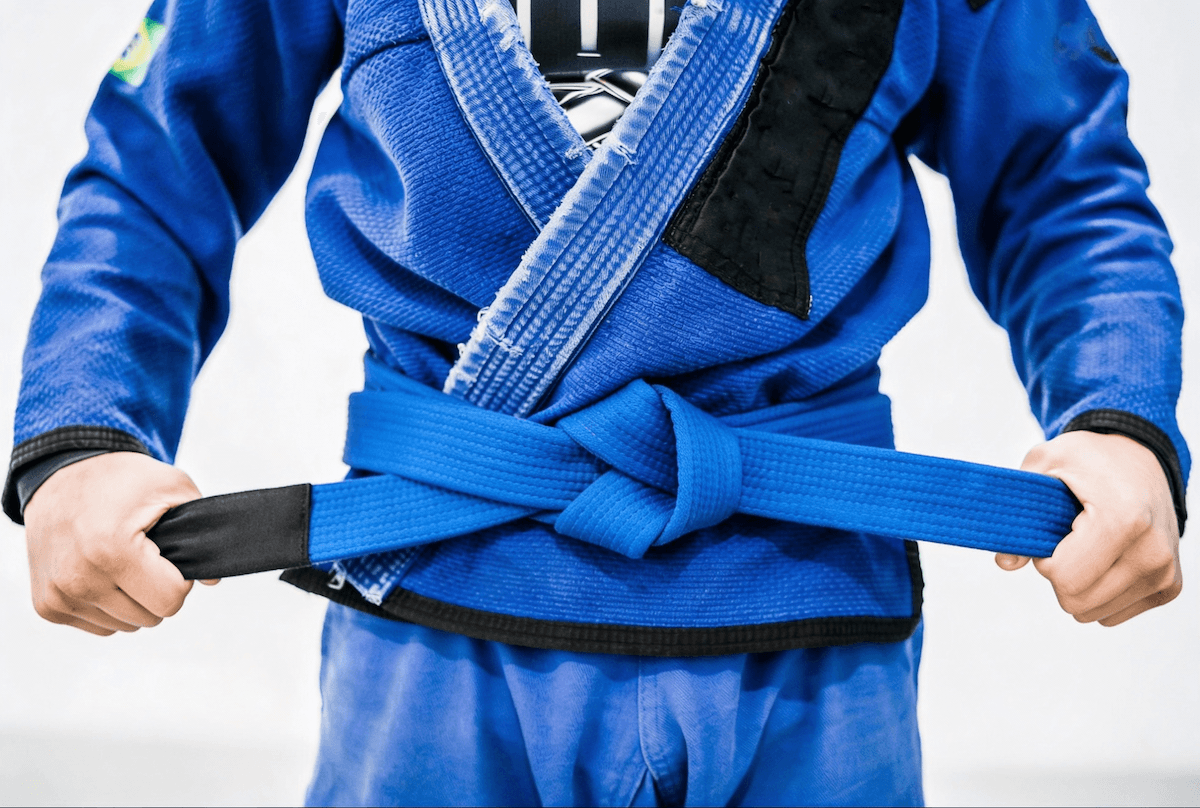
The most common question among Brazilian Jiu Jitsu beginners is: “How long will it take me to get my blue belt?” The short answer is between 1.5 and 3 years, but the reality is much more personal than a simple number.
The blue belt represents your first major achievement in BJJ. It’s proof that you’ve overcome the initial phase, where everything seems confusing, and developed a solid technical foundation. But getting there requires more than just showing up to class.
Average Time to Blue Belt
According to statistics and experience from academies around the world, most practitioners earn their blue belt between 18 months and 3 years of consistent training.
Some important data points:
- The most common minimum time is 18 months for those who train intensively.
- The general average is between 2 and 3 years.
- The IBJJF (International Brazilian Jiu Jitsu Federation) requires you to be at least 16 years old to receive the blue belt.
But these numbers don’t tell the whole story. What really matters isn’t the years in the sport, but the hours accumulated on the mats.
Factors That Affect Your Progression
1. Training Frequency
This is the most determining factor. The difference between getting your blue belt in 18 months or 3 years often comes down to how many hours per week you dedicate to training.
- 1-2 sessions per week. Slow but steady progress. Expect 3+ years.
- 3-4 sessions per week. The sweet spot for most people. Expect 2-2.5 years.
- 5+ sessions per week. Accelerated progress. Possible in 18-24 months.
Someone who trains 6 hours weekly for one year will have accumulated more practice time than someone who trains 2 hours weekly for two years.
2. Training Quality
Not all hours on the mat are equal. The quality of your training matters as much as the quantity:
- Attention during technical explanations. Avoid distractions and observe the details.
- Deliberate practice. Work on your weaknesses, not just what you already dominate.
- Smart rolling. Learn from each roll, whether you win or lose.
- Questions for your instructor. Don’t leave with doubts about the techniques.
3. Prior Physical Aptitude
Your physical starting point influences your initial learning speed:
- Practitioners from other martial arts (judo, wrestling) tend to adapt faster.
- Flexibility, strength, and cardiovascular endurance help, but aren’t determinative.
- BJJ is known for leveling the playing field: technique overcomes athleticism.
4. Long-Term Consistency
BJJ rewards consistency over intense sprints. It’s better to train 3 times per week for years than 6 times per week for a few months and then quit.
Injuries, burnout, and personal life can interrupt your training. Those who reach blue belt (and beyond) are the ones who return to the mats after every pause.
What’s Expected of a Blue Belt?
The blue belt doesn’t mean you’ve mastered BJJ. It means you’ve developed:
- Broad technical knowledge. You understand basic positions, transitions, and submissions.
- Defensive capability. You can survive and escape from bad positions.
- Intentional movement. You no longer react randomly; you have a plan during rolls.
- BJJ vocabulary. You know the names of techniques and positions.
- Mat etiquette. You understand the unwritten rules of the academy.
A blue belt may not win every roll, but understands why they lose and what they should improve.
Mistakes That Slow Your Progress
Obsessing Over the Belt
The BJJ paradox: the more you obsess over the belt, the slower it seems to arrive. Instructors promote based on your demonstrated skill, not how much you desire the promotion.
Focus on improving specific aspects:
- Guard retention.
- Mount escapes.
- Guard passes.
- Control from dominant positions.
The belt will come as a natural consequence of your technical improvement.
Comparing Yourself to Others
Every practitioner has unique circumstances:
- Age and initial physical condition.
- Time available for training.
- Previous sports experience.
- Individual learning speed.
Someone might get their blue belt in one year; another might take four. Both paths are valid if the learning is genuine.
Avoiding Rolling
Rolling is where you integrate everything you’ve learned. Some beginners avoid it out of fear of losing or getting injured, but it’s essential for progress.
Tips for making the most of rolling:
- Start with trusted training partners.
- Communicate if you have injuries or limitations.
- Focus on applying specific techniques, not just “winning.”
- Analyze each roll: what worked? What failed?
Skipping Fundamentals
Advanced techniques are attractive, but the blue belt is built on solid fundamentals:
- Breakfalls and forward rolls.
- Base and posture control.
- Basic escapes (mount, side control, back).
- Fundamental submissions (armbar, triangle, rear naked choke).
Master the basics before chasing the complex.
The Belt System in Perspective
To understand the blue belt, it helps to see the complete BJJ picture:
| Belt | Minimum Time at Rank | Requirements |
|---|---|---|
| White | Variable | None |
| Blue | 2+ years | Minimum 16 years of age |
| Purple | 1.5 years | 18 months as blue |
| Brown | 1 year | 18 months as purple, 18+ years |
| Black | 3+ years | 1 year as brown, 19+ years |
The path to black belt typically takes between 10 and 15 years. The blue belt is just the beginning of the journey, although it represents a significant achievement.
Tips to Accelerate Your Progress
1. Train with Intention
Before each class, define an objective:
- “Today I’ll work on my closed guard.”
- “I’ll attempt the hip escape from side control.”
- “I’ll look for the armbar from mount.”
Training with intention beats training by inertia.
2. Keep a Training Journal
Recording your practice helps you identify patterns and areas for improvement:
- Techniques learned in class.
- Recurring problems during rolling.
- Questions for your instructor.
- Physical sensations (fatigue, minor injuries).
3. Study Off the Mats
Complement your in-person training:
- Instructional videos from elite competitors.
- Analysis of tournament matches.
- Reading about BJJ history and philosophy.
- Visualization of techniques before bed.
4. Take Care of Your Body
BJJ is physically demanding. To stay consistent:
- Sleep enough to recover.
- Eat properly before and after training.
- Stretch and do mobility work regularly.
- Listen to your body and rest when needed.
5. Build Relationships at the Academy
Your training partners are your greatest resource:
- Find partners at your level to grow together.
- Learn from higher belts by observing their technique.
- Offer help to newer students (teaching reinforces learning).
- Participate in your academy’s community.
The Truth About the Blue Belt
The blue belt is important, but it’s not the destination. It’s a sign that you’ve overcome the hardest stage of BJJ: the beginning.
Many practitioners quit before reaching blue belt. Those who persevere discover that the belt itself doesn’t change anything: you’re still the same practitioner the day before and the day after the promotion.
What does change is your perspective. With the blue belt comes confirmation that you belong, that BJJ is part of your identity. And with that certainty comes the motivation to continue the path toward purple, brown, and beyond.
Summary
How long does it take to get a blue belt? Between 1.5 and 3 years for most people, but the exact time depends on you: your training frequency, your focus during classes, and your ability to stay consistent.
Don’t obsess over the date. Focus on the process:
- Train regularly.
- Pay attention to the details.
- Learn from each roll.
- Enjoy the journey.
The blue belt will come when you’re ready. And when it does, you’ll discover it was just the beginning.
OSS. 🤙

BJJ practitioner, blue belt, always eager to keep learning and improving. Software engineer for over 15 years, I founded MatGoat to help BJJ and MMA academies continue growing.


