
How Long Does It Take to Get a BJJ Purple Belt?
Earning a BJJ purple belt averages 5 to 6 years of consistent training. Review IBJJF time requirements, technical milestones, and mat hour benchmarks.
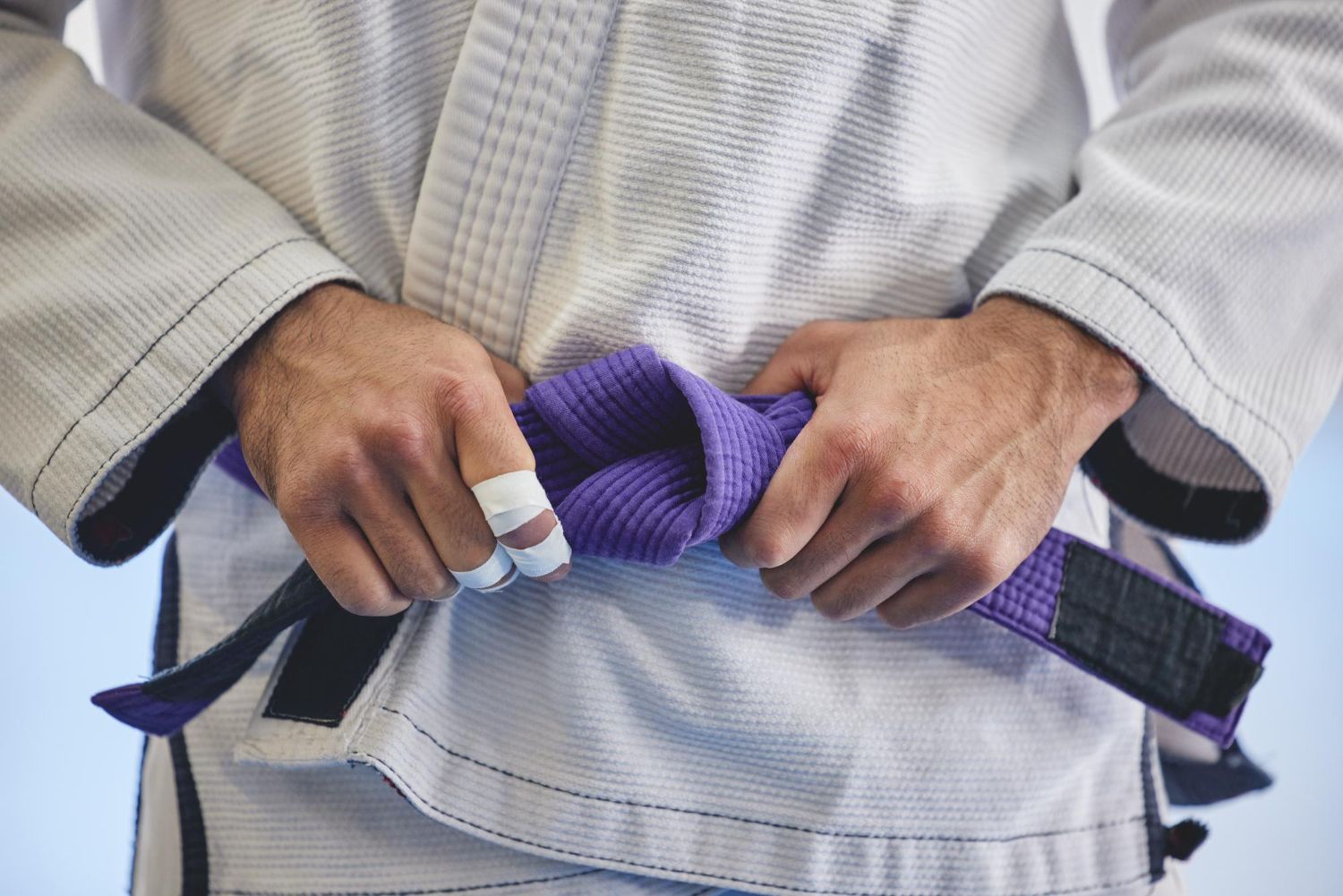
In BeltChecker’s July 14, 2026 data, the reported averages for verified profiles were 2 years and 2 months at white belt and 3 years and 11 months at blue belt, roughly 6 years combined. The live BeltChecker timing page is a self-selected platform dataset, not a representative census, and individual timelines vary widely.
Purple belt is the third rank in the adult BJJ belt system, sitting between blue and brown. It marks the point where most coaches agree you have moved past beginner and intermediate territory. You are a real problem on the mats.
What the IBJJF Requires
The International Brazilian Jiu-Jitsu Federation graduation system sets minimum age and time-in-rank requirements. These are the floor, not the average.
For purple belt:
- Minimum age: 16 years old.
- Minimum time at blue belt: 2 years.
This means no matter how good you are, you cannot receive a purple belt from a competition-recognized instructor before spending at least 2 years as a blue belt. Many academies follow these rules even outside of IBJJF competitions.
The Average Timeline
The BeltChecker snapshot reported:
| Belt | Reported Average | Approximate Cumulative Time |
|---|---|---|
| White | 2 years, 2 months | 2 years, 2 months |
| Blue | 3 years, 11 months | 6 years, 1 month |
The averages come from different sets of verified profiles and should not be treated as a prediction for one student. Attendance, long breaks, health, instructor standards, and academy curriculum all affect the timeline.
In an archived BJJ belt distribution snapshot, purple belts represented about 13% of registered profiles. That cross-sectional profile mix cannot measure how many white belts later quit or earn promotion.
What Actually Determines the Timeline
Training frequency
This is a major lever. A student scheduled for five sessions has more opportunities for mat time than one scheduled for two, provided both actually attend. Every class adds rolls, reps, and live situations that build the instincts a purple belt needs.
Choose a sustainable weekly frequency with your coach instead of chasing a universal target.
Quality of sparring partners
Training at a competitive academy where blue and purple belts push each other hard accelerates development. Comfortable rolls with partners who never challenge you do the opposite.
Competition experience
Competing is not required for promotion at most academies. But coaches notice it. A student who competes regularly, handles pressure, and comes back from losses ready to fix problems is exactly the kind of person who earns promotions.
Consistency over years
Long breaks interrupt practice and may require readaptation when you return. A sustainable routine is usually more useful than cycles of intense training and extended absence.
Your instructor’s standards
Promotion criteria vary by academy. Some instructors are fast with belts. Others are known for being conservative. A purple belt from a strict academy carries a different weight than one from a school that promotes quickly.
The Blue Belt Plateau
Most students who reach blue belt notice something uncomfortable: progress slows down. You are no longer the new person on the mats. The basics are familiar. But purple feels far away.
This is normal. Blue belt can last several years, and that span can feel long. The available profile snapshot does not track a cohort, so it cannot calculate blue-belt dropout.
What helps:
- Picking a specific area to develop (guard passing, leg locks, wrestling).
- Competing regularly to test what is working.
- Helping newer students, which forces you to explain what you know.
You can read more about the blue belt timeline and what makes it so difficult.
What Changes at Purple Belt
Purple belt is not just a visual milestone. The change is functional.
A purple belt can:
- Flow between positions without thinking about each step.
- Control blue and white belts with significant ease.
- Develop a personal game with identifiable strengths.
- Begin assisting in class with meaningful contributions.
Coaches often describe purple belts as practitioners who “have their own voice on the mats.” You are no longer copying techniques. You are using them as tools in a larger strategy.
Can You Speed Up the Process?
Yes, within limits set by your biology, your schedule, and your instructor.
The most reliable ways to get there faster:
- Train 4 to 5 times per week without burning out.
- Compete at least 2 to 3 times per year.
- Get private lessons targeted at your weaknesses.
- Film your rolls and review them with your coach.
- Stay healthy: injuries are the main thing that extends timelines beyond your control.
What does not work: asking your instructor when you will be promoted. The question signals that you are focused on the belt, not the training.
A Note on Age
Adults who start BJJ after 30 often worry that age slows their progress. It does affect some things, particularly recovery between sessions. But experience, discipline, and body awareness can offset a lot of that.
Many practitioners who start in their 30s reach purple belt on a similar timeline to younger athletes who train the same number of hours per week. The path is the same. The body just needs more recovery time.
What Purple Belt Means for Academy Owners
If you run a BJJ academy, purple belts are some of your most important assets. They are not yet black belts, but they can teach warmups, assist with fundamentals classes, and model the right culture on the mats.
Tracking which students are approaching the purple belt timeline helps you plan promotions thoughtfully and give those students additional responsibility. That responsibility tends to keep them engaged and committed to the long term.
With MatGoat, you can track each student’s belt history, attendance, and class participation. That data makes promotion decisions clearer and helps you spot students who are ready for more responsibility.
Summary
Purple belt in BJJ takes most practitioners 4 to 7 years from the first day on the mats. The IBJJF requires a minimum of 2 years at blue belt and a minimum age of 16.
Training frequency, sparring quality, competition experience, and consistency are the main factors within your control. The belt comes when your instructor believes your technique, judgment, and attitude match the rank.
The students who get there fastest are not always the most talented. They are the ones who show up the most.
OSS. 🤙
Frequently asked questions
How long does it take to get a purple belt in BJJ on average?
Most practitioners spend roughly 2 years at white belt and 3 to 4 years at blue belt, reaching purple belt after approximately 5 to 6 cumulative years.
What is the minimum time required at blue belt before purple belt?
Under official IBJJF guidelines, an adult must spend a minimum of two full years registered as a blue belt before being eligible for promotion to purple belt.
What is the minimum age to receive a BJJ purple belt?
The IBJJF requires practitioners to be at least 16 years old to hold an adult purple belt.
What technical skills define a BJJ purple belt?
A purple belt demonstrates a dangerous, cohesive guard game, effective guard passing chains, deep submission defense, and the ability to mentor lower ranks.

Founder of MatGoat and a software engineer with more than 20 years of experience building software products. He has practiced BJJ since 2021 and develops MatGoat using feedback from martial arts academies.
View full profile

