
Women in BJJ: Statistics That Reveal the Gender Gap
Women represent 14% of white-belt profiles and 5% of black-belt profiles in BeltChecker's live data. We explain the limits and academy actions.
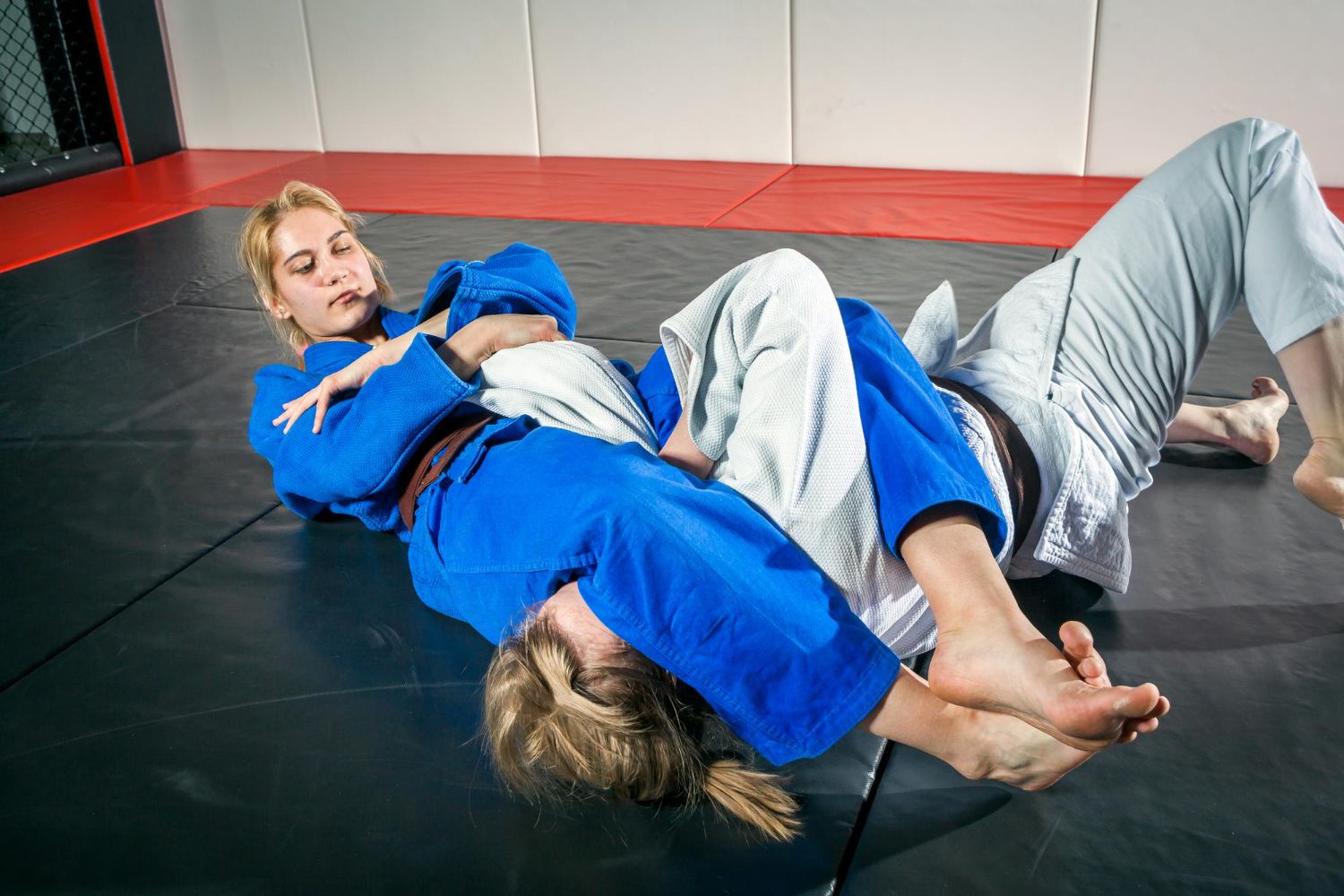
In BeltChecker’s July 14, 2026 snapshot, women represented 14% of white-belt profiles and 5% of black-belt profiles.
The source is BeltChecker’s live gender statistics. It is a global, self-selected set of registered profiles, not a representative census. The site publishes percentages rather than row-level personal data, and the figures change as profiles change.
The Big Picture: 11% of Profiles Are Female
According to available data:
- Female share of all BeltChecker profiles: 11%.
- Female share of black-belt profiles: 5%.
- Difference between white- and black-belt shares: 9 percentage points.
Within BeltChecker, 11 of every 100 profiles are women; among black-belt profiles, 5 of every 100 are women. These are platform proportions, not worldwide participation estimates.
Gender Distribution by Belt
The following table reports BeltChecker’s live profile shares on July 14, 2026:
| Belt | % Women | % Men |
|---|---|---|
| White | 14% | 86% |
| Blue | 13% | 87% |
| Purple | 10% | 90% |
| Brown | 8% | 92% |
| Black | 5% | 95% |
The pattern is clear: as belt level increases, the proportion of women consistently decreases.
What the Snapshot Cannot Tell Us
This is a cross-sectional profile mix, not a cohort followed from white to black belt. It cannot calculate a woman’s promotion probability, dropout rate, or the cause of the differences between ranks. Doing that would require anonymized start dates, promotion histories, exits, follow-up periods, and geographic weighting for the same cohort.
Questions Academies Can Audit Locally
BeltChecker’s percentages do not explain causes. The following are practical areas an academy can examine through anonymous feedback and its own attendance data.
1. Fewer Training Partners
In many academies, women train primarily with men due to the lack of other women:
- Strength and size differences create frustration.
- Some men don’t know how to adjust intensity.
- Lack of sparring partners to develop technique with.
When there are no other women, training can feel isolating.
2. Academy Environment
Not all academies are equally welcoming:
- Inappropriate comments or uncomfortable stares.
- “Bro” culture that implicitly excludes.
- Lack of adequate changing rooms or privacy.
- Class schedules that don’t consider other responsibilities.
Women often have to “put up with” situations that men never experience.
3. Limited Representation
Seeing is believing:
- Few female instructors as role models.
- Less media coverage of female competitors.
- Lack of visible success stories.
Without examples of women who have walked the path, it’s harder to visualize one’s own success.
4. Disproportionate Responsibilities
Broader social statistics affect BJJ:
- Women typically take on more family responsibilities.
- Pregnancy and motherhood interrupt training.
- Less time available for “personal” hobbies.
These responsibilities may affect training continuity, but the BeltChecker snapshot does not measure that effect.
5. The Cost of Injuries
Injuries affect everyone, but the impact can be different:
- Recovery during pregnancy or breastfeeding is more complex.
- Social pressure to “not take risks” is greater for women.
- An injury can be the excuse for others to question their participation.
The Business Case for Retaining Women
For academy owners, gender diversity isn’t just ethical: it’s good business.
The Untapped Market
- Women are roughly half of the population but 11% of BeltChecker profiles.
- The growth potential is enormous.
- Academies that attract women access a less competitive market.
Measure Retention Locally
Track retention by cohort and invite anonymous feedback about community, class formats, and barriers. That lets you test whether changes help your students without claiming a universal uplift.
Impact on Culture
Academies seeking a more gender-diverse membership can work toward:
- Less aggressive and more technical environment.
- Better mat etiquette.
- More diverse and welcoming community for everyone.
Positive Trends and Role Models
Despite the challenges, there are signs of progress:
Elite Competitors
The level of women’s competition has never been higher:
- Gabi Garcia. Dominant in heavyweight for a decade.
- Mackenzie Dern. Successful transition to MMA.
- Bia Mesquita. Multiple-time world champion.
- Ffion Davies. Refined technique that inspires thousands.
These athletes demonstrate that elite women’s BJJ is spectacular.
Growth of Specific Programs
More and more academies offer:
- Women-only classes.
- Women’s self-defense seminars.
- Women-exclusive competitions.
- Mentorship programs between practitioners.
Online Communities
Social networks have created support spaces:
- Specific Facebook groups and forums.
- Instagram accounts of female instructors.
- Podcasts and content aimed at women.
- Women-only events and retreats.
What Academies Can Do
1. Test Women-Only Classes
Potential benefits to evaluate:
- Less intimidating environment for beginners.
- Opportunity to develop technique without strength differences.
- Community among female practitioners.
- Entry point that later leads to mixed classes.
Doesn’t replace mixed classes, complements them.
2. Develop Female Instructors
Invest in developing female instructors:
- Mentor purple and brown belts toward teaching.
- Offer opportunities to lead warmups or basic techniques.
- Create a pipeline of future professors.
Seeing a woman leading the class changes perceptions.
3. Establish Clear Policies
Have zero tolerance for:
- Inappropriate comments about bodies or clothing.
- Overly aggressive behavior during sparring.
- Any form of harassment or discomfort.
Policies should be explicit, not assumed.
4. Adapt Facilities
Practical considerations:
- Private and secure changing rooms.
- Gis available in small sizes.
- Schedules that consider family responsibilities.
- Clean and professional environment.
5. Celebrate Female Achievements
Visibility matters:
- Highlight women’s promotions on social media.
- Celebrate competition victories equally.
- Display photos of female practitioners in the academy.
- Tell stories of women from the academy on the website.
For Female Practitioners
If You’re Starting
Tips for navigating the beginning:
- Look for academies with other women (ask before signing up).
- Don’t be afraid to set boundaries during sparring.
- Connect with other female practitioners from day one.
- Remember: initial discomfort is normal for everyone.
If You’re on the Path
For those who’ve passed the initial phase:
- Be the role model you perhaps didn’t have.
- Help newcomers feel welcome.
- Don’t accept inappropriate behavior: report it.
- Your permanence inspires others.
If You’re Considering Quitting
Before giving up, consider:
- Is the problem BJJ or the specific academy?
- Have you tried women-only classes?
- Are there other academies in your area with a better environment?
- Can you talk to management about your concerns?
Sometimes changing academies completely transforms the experience.
The Future of Women’s BJJ
Visible developments include:
- More girls are starting BJJ than ever before.
- Women’s competitions are gaining visibility.
- Social networks amplify female practitioners’ voices.
- Social pressure pushes academies toward inclusion.
Because the dataset is not a time series, it cannot estimate how quickly participation might change.
Summary
The data is clear but not definitive:
- 11% female share across all BeltChecker profiles.
- 14% of white-belt profiles and 5% of black-belt profiles.
- A 9-point difference between those profile shares.
The profile gap is real within BeltChecker, but the source cannot measure retention or causation. Academies can still prioritize inclusion, measure their own results, and celebrate female practitioners.
BJJ has the potential to empower anyone, regardless of gender. But for that potential to be realized for women, we need to recognize current barriers and actively work to break them down.
If you’re a woman who trains BJJ, you’re part of a group that defies statistics. If you’re an academy owner, you have the power to change these numbers. If you’re a male practitioner, you can be an ally who makes the mats more welcoming for everyone.
The future of BJJ will be more diverse. The question is whether we’ll be part of the solution or the status quo.
OSS. 🤙

Founder of MatGoat and a software engineer with more than 20 years of experience building software products. He has practiced BJJ since 2021 and develops MatGoat using feedback from martial arts academies.
View full profile

