
The Most Important Brazilian Jiu-Jitsu Competitions
A practical guide to the tournaments that define BJJ: IBJJF Worlds, ADCC, Abu Dhabi World Pro, CJI, and other professional circuits.
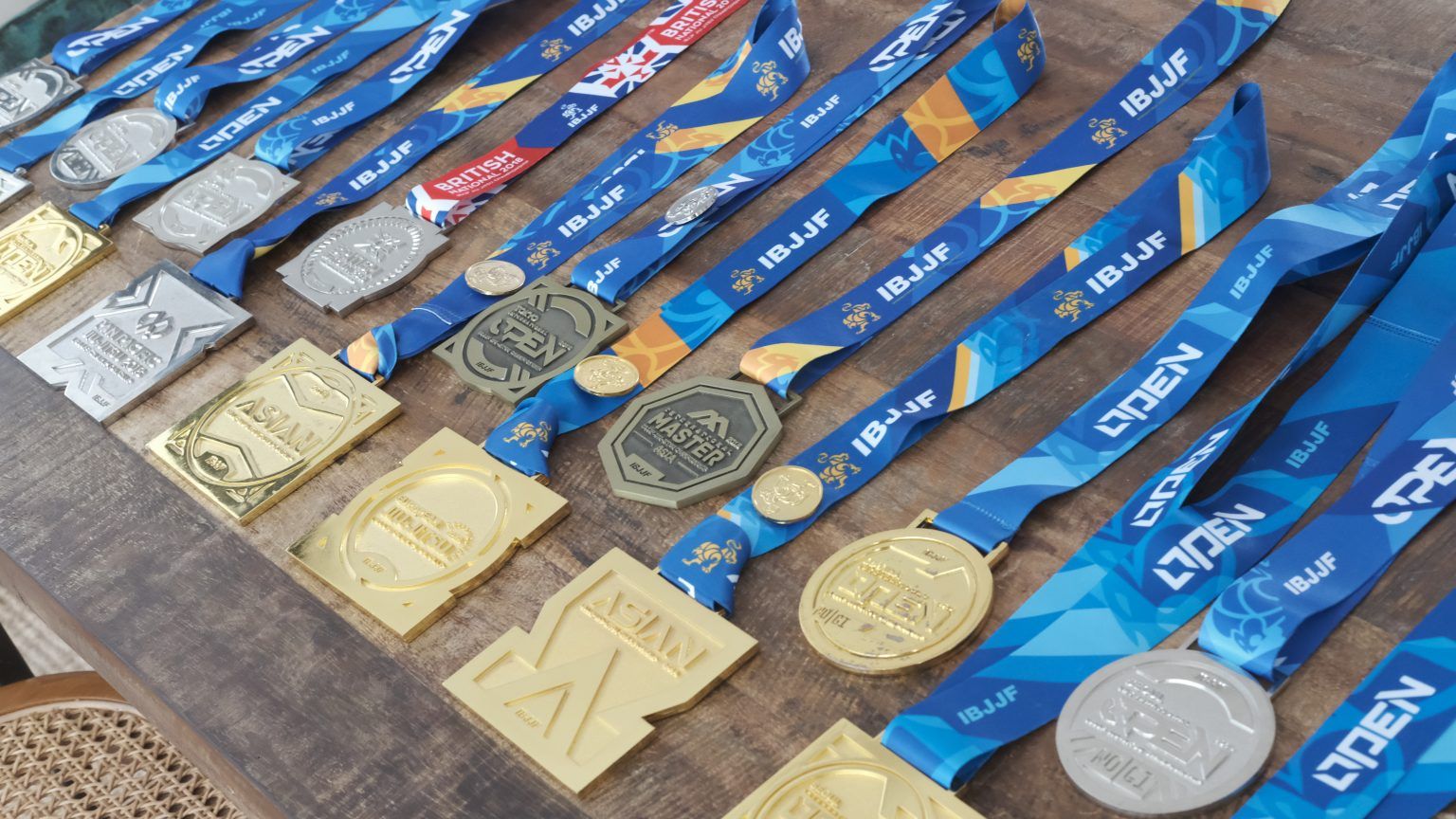
Brazilian Jiu-Jitsu now has a broad competition calendar: traditional gi championships, invitation-only no-gi events, open qualifiers, and professional superfights. There is no authoritative worldwide census of practitioners, academies, medals, or prize money, so this guide avoids unsupported global totals and links to organizers for current details.
IBJJF Worlds and the Gi Grand Slam
The IBJJF World Jiu-Jitsu Championship, commonly called the Worlds or Mundials, is one of the central titles in gi BJJ. The wider IBJJF season also includes the European, Pan, and Brazilian championships.
Divisions, eligibility rules, registration fees, venues, and dates change by season. Use the official IBJJF calendar for the current event listing and the IBJJF rules and graduation resources before registering.
If you plan to compete under that ruleset, also review the guide to IBJJF illegal moves by belt and age.
For academy teams, the practical work is consistent across events:
- Confirm membership and eligibility before registration closes.
- Record the athlete’s division, belt, age class, and weight limit.
- Check the event-specific schedule and uniform rules.
- Keep results and promotion history with the student’s profile.
An academy management system like MatGoat can centralize those records alongside attendance and communication.
ADCC and the No-Gi World Championship
The ADCC Submission Fighting World Championship is a major no-gi event built around invited athletes and qualification through regional trials. Its rules, categories, qualifying route, venue, and athlete list differ from IBJJF competition.
Consult the official ADCC World Championship page and the ADCC event site for the current edition. Historical match counts, submission rates, and purse figures should not be carried into a new edition without checking the organizer’s published material.
Abu Dhabi World Professional and the AJP Tour
The Abu Dhabi World Professional Jiu-Jitsu Championship is the flagship event at the end of the AJP Tour season. AJP uses its own ranking, divisions, weigh-in procedures, and event regulations, so athletes should not assume that IBJJF rules apply.
The official AJP Tour site publishes the live calendar, event documents, rankings, and registration information. Those primary pages are the right source for current prize policies and eligibility.
Craig Jones Invitational
The Craig Jones Invitational (CJI) brought a different presentation and compensation model to professional no-gi grappling. Its official first-edition site advertised a $1,000,000 prize for each division winner and a $10,001 minimum purse per invited competitor. See the archived CJI event page for that edition’s figures.
The second edition moved to a team tournament and a women’s bracket. Its organizer advertised a $1,000,000 team prize and a $100,000 women’s bracket on the official CJI 2 page. These are edition-specific advertised purses, not benchmarks for the rest of the sport.
Other Professional Circuits
The professional calendar also includes superfight series and promotion-specific championships. Examples include Who’s Number One, Polaris, Fight to Win, ONE Championship, and other independent events. Each uses different scoring, contracts, streaming arrangements, and athlete-selection methods.
ONE publishes its current submission-grappling rules and event coverage. For every promotion, verify the current rules and card on the organizer’s own site rather than relying on an old article or social-media summary.
How to Choose Competitions for Your Academy
Choose events based on student development and logistics, not headline size:
- Experience level. Match beginners with suitable local divisions before adding major travel.
- Ruleset. Teach the scoring, legal techniques, and boundaries used by that organizer.
- Cost. Budget registration, membership, travel, accommodation, coaching, and possible schedule changes.
- Recovery. Avoid stacking events without enough time for health and training decisions.
- Record keeping. Track registrations, results, injuries, and lessons learned consistently.
What the Available Data Cannot Establish
Promoters publish registration lists, brackets, results, and prize announcements for individual events, but those datasets do not form a worldwide census. They cannot reliably establish the total number of BJJ practitioners, academies, black belts, or the sport’s global growth rate.
When comparing editions, define the population first: registered athletes or completed matches, gi or no-gi, belt and age divisions, and whether withdrawals and duplicate registrations are included. Without that method, precise growth and submission percentages can mislead.
Conclusion
The major BJJ circuits serve different purposes: IBJJF anchors the gi calendar, ADCC is a leading no-gi championship, AJP runs an international ranking circuit, and CJI and other professional promotions experiment with new formats. Check each organizer’s current primary material, then build a competition plan that fits your athletes rather than an unsupported industry statistic.

Founder of MatGoat and a software engineer with more than 20 years of experience building software products. He has practiced BJJ since 2021 and develops MatGoat using feedback from martial arts academies.
View full profile

